Industrial Denim Washing Ball Guide: Usage, Troubleshooting and Selection
This complete guide covers everything you need to know about industrial denim washing balls, including how to use them correctly, troubleshooting common problems, and how to select the best balls for your factory.
Ideal for denim garment factories, laundry plants, and washing production lines.
Introduction — What is an Industrial Denim Washing Ball?
Denim washing is a critical process in the textile industry. Many factories often face challenges such as uneven fading, fabric damage, high energy consumption, and long washing times. An industrial denim washing ball is an innovative solution that helps solve these problems efficiently.
Modern factories increasingly use these washing balls as an eco-friendly, cost-effective solution for denim finishing. They help produce consistent stone-wash, vintage, and soft finish effects.
How to Use Industrial Denim Washing Balls Correctly?
Industrial denim washing balls are essential auxiliary tools for factory large-scale denim washing. They enhance friction between denim fabrics, improve washing efficiency, replace traditional pumice stones to reduce slag and dust, and protect the inner drum of industrial washing equipment. Proper usage ensures stable production processes and high-quality denim products, which is crucial for denim garment factories aiming to optimize workflow and reduce operational costs.
Key Operation Steps
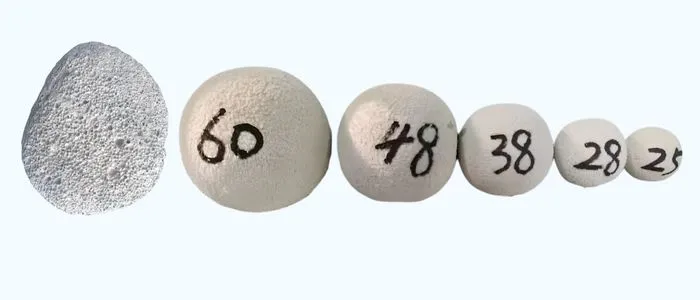
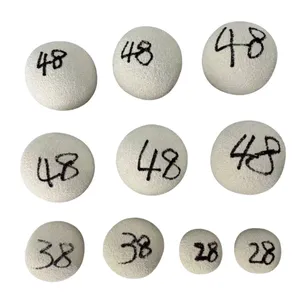
- Capacity-based Selection: For small to medium-sized factories with a daily output of 500-1000 denim pieces, choose 40-50mm industrial denim washing balls, using 50-80 pieces per 100kg of denim. For large factories with a daily output exceeding 1000 pieces, opt for 50-60mm wear-resistant washing balls, using 80-120 pieces per 100kg of denim.
- Pre-washing Preparation: Clean the industrial washing machine thoroughly to remove debris and residual detergent, sort denim by color and thickness to prevent dyeing and uneven washing, pre-treat heavy stains (such as oil stains from cutting and sewing) with industrial-grade mild stain remover, and place the washing balls evenly into the machine drum.
- Parameter Setting: The optimal water temperature for industrial denim washing balls is 40-60℃, which is suitable for most industrial denim washing processes like stone washing and enzyme washing. Adjust the machine rotation speed to 500-800rpm and the washing time to 20-40 minutes, depending on the desired washing effect. For enzyme washing, add the washing balls after the enzyme is activated to avoid affecting enzyme activity.
- Post-washing Treatment: After the washing process, collect the washing balls through the machine’s built-in filter, rinse them with clean water to remove denim fluff and residue, dry them in a well-ventilated area (avoid high-temperature drying or direct sunlight), and replace worn balls every 3-6 months.
Common Usage Mistakes to Avoid
- Using household wash balls instead of industrial-grade ones, as household balls are not wear-resistant, easy to break, and unable to adapt to large-scale factory production.
- Mixing dark and light denim during washing, which leads to dyeing and unqualified products.
- Setting excessively high water temperature or rotation speed, which damages the washing balls and the machine’s inner drum.
- Neglecting the cleaning and maintenance of washing balls, resulting in fluff accumulation, reduced friction effect, and poor denim washing quality.
- Industrial Denim Washing Ball Troubleshooting
In large-scale factory production, industrial denim washing balls may encounter issues that affect production efficiency and product quality. This section outlines the most common faults and targeted solutions to help factory operators quickly resolve problems and resume normal production.
Common Faults & Solutions
- Weak Cleaning Power: If the washing effect is unsatisfactory (e.g., uneven fading or residual stains), replace the washing balls with the correct specifications, increase the number of balls according to the denim load, adjust the water temperature to 40-60℃ and extend the washing time if necessary, and clean the balls thoroughly to remove fluff and residue.
- Abnormal Noise During Operation: If the washing balls cause collision or friction noise, use balls of uniform size, reduce the number of balls to the appropriate range, discard cracked or deformed balls, and clean the machine drum to remove debris.
- Fast Wear and Breakage: To address rapid wear or breakage, use high-quality wear-resistant industrial denim washing balls (such as special rubber cotton balls), adjust the machine rotation speed to 500-800rpm and water temperature below 80℃, and add a pre-filter device to remove hard debris from the denim.
- Machine Drum Damage: If the washing balls scratch or wear the machine drum, discard balls with sharp edges, use balls of the correct size, reduce the number of balls to avoid excessive drum load, and regularly maintain the drum by polishing scratches.
- How to Choose Industrial Denim Washing Balls for Factories?
Choosing the right industrial denim washing balls is critical for improving production efficiency, ensuring product quality, and extending the service life of industrial washing equipment. With numerous options on the market, selecting the right product based on factory needs helps reduce replacement costs and maintain stable production.
Practical Purchase Tips
- Consider Production Capacity and Machine Type: For drum-type industrial washing machines (commonly used in small to medium-sized factories), choose 40-50mm spherical washing balls for even friction and easy rolling. For continuous-type washing machines (commonly used in large factories), select 50-60mm elliptical or cylindrical washing balls, which are more wear-resistant and suitable for long-term continuous operation.
- Prioritize Material Quality: Choose special rubber cotton balls (wear-resistant, high-temperature resistant up to 80℃, acid and alkali resistant) for versatile use in various washing processes, or polystyrene foam balls (lightweight and elastic) for enzyme washing and soft washing to reduce denim deformation. Avoid low-quality plastic balls, which are easy to break and may scratch the machine drum and denim.
- Ensure Uniform Specifications: Select washing balls with a diameter error of ≤2mm and uniform weight to ensure even friction, stable washing effect, and reduced equipment wear. Choose balls with a smooth surface and no sharp edges.
- Focus on Cost-Effectiveness: Avoid blindly pursuing low prices, as low-quality balls require frequent replacement and increase long-term costs. Choose products with stable quality (service life of 3-6 months), test samples before bulk purchase, and select suppliers with timely delivery and perfect after-sales service.
Common Purchase Misconceptions
- Blindly pursuing low prices: Low-quality washing balls wear quickly and break easily, increasing replacement costs and affecting production efficiency.
- Believing larger size is better: Oversized balls increase the machine’s load and cause drum damage. • Ignoring material quality and focusing only on appearance: The service life and washing effect of washing balls depend on material quality, not appearance.
- Blindly pursuing high density: High-density balls are not suitable for all processes; for example, enzyme washing requires lightweight and elastic balls to avoid damaging denim fabrics.
- Industrial Denim Washing Ball FAQ
Below are the most frequently asked questions about industrial denim washing balls in factory use, with concise and practical answers to help you solve doubts quickly and improve production efficiency.
Frequently Asked Questions & Answers
Q1: How often should industrial denim washing balls be replaced?
A1: It depends on the frequency of use and production load. Generally, replace them every 3-6 months. If the balls are severely worn, cracked, or deformed, replace them immediately to ensure washing effect and avoid equipment damage.
Q2: Can industrial denim washing balls be reused?
A2: Yes, they can be reused. After each use, clean them thoroughly with clean water to remove fluff and residue, dry them in a well-ventilated area, and store them properly. Discard any damaged balls to avoid affecting production.
Q3: Are industrial denim washing balls suitable for all industrial washing processes?
A3: Most processes are applicable, including stone washing, enzyme washing, and normal washing. For enzyme washing, add the balls after the enzyme is activated to avoid affecting enzyme activity. For special soft washing processes, choose lightweight polystyrene foam balls.
Q4: What is the difference between industrial denim washing balls and household ones?
A4: Industrial-grade balls are more wear-resistant, tough, and high-temperature resistant, designed for large-scale factory production and industrial washing machines. Household balls are lighter, less durable, and cannot adapt to heavy-load, long-term operation.
Q5: How to store industrial denim washing balls when not in use?
A5: Store them in a clean, dry, and well-ventilated storage box, away from high temperature, direct sunlight, and corrosive substances. Avoid stacking heavy objects on them to prevent deformation.
Q6: Will industrial denim washing balls damage denim fabrics?
A6: No, if used correctly. Choose balls with a smooth surface and no sharp edges, select the appropriate size and quantity, and set the correct washing parameters. Avoid using hard, low-quality balls, which may scratch or pill denim.
Contact us now for free samples.
Contact us now for a quote. 86 159 8958 8912